Threat Intelligence Life Cycle

Enterprise Threat Intelligence: From Data to Defensive Action
Enterprise security architects increasingly recognize that reactive security models are insufficient against sophisticated adversaries. Threat Intelligence (TI) programs transform raw security data into actionable insights that drive proactive defense strategies. However, many enterprises struggle to operationalize threat intelligence beyond basic IOC feeds.
The Intelligence Architecture Challenge
Traditional enterprise security generates massive data volumes—network logs, vulnerability scans, endpoint telemetry—but lacks the analytical framework to convert information into intelligence. Effective threat intelligence architecture requires systematic collection, processing, and dissemination workflows that support multiple security functions simultaneously.
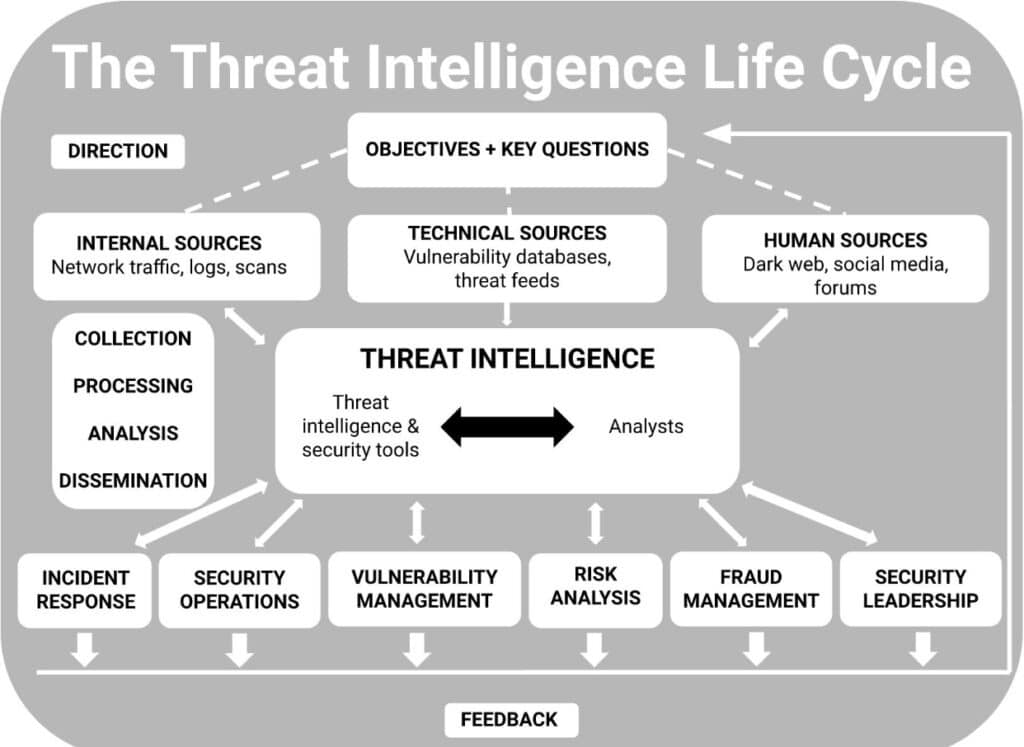
Enterprise TI Lifecycle Framework
Strategic Direction Setting: Define intelligence requirements based on business risk priorities, regulatory obligations, and threat landscape assessment. Enterprise programs must align TI objectives with executive risk tolerance and operational security capabilities.
Multi-Source Collection Strategy:
- Technical Sources: Internal network telemetry, vulnerability feeds, and security tool outputs provide organization-specific threat context
- External Intelligence: Commercial threat feeds, industry sharing communities, and government alerts deliver broader threat landscape awareness
- Human Intelligence: Dark web monitoring, social engineering reconnaissance, and adversary tracking provide behavioral insights traditional tools miss
Analysis and Processing Pipeline: Transform raw indicators into contextual intelligence through automated correlation, analyst interpretation, and integration with existing security infrastructure. Enterprise-grade TI platforms must support both tactical indicators and strategic threat assessments.
Operational Integration Points
Security Operations Integration: TI feeds directly enhance SIEM correlation rules, threat hunting hypotheses, and incident response playbooks. Intelligence-driven security operations shift from reactive alerting to proactive threat tracking.
Risk Management Integration: Threat intelligence informs vulnerability prioritization, business continuity planning, and third-party risk assessments. Strategic intelligence enables executive decision-making about security investments and risk acceptance.
Enterprise Governance: TI programs require feedback loops that measure intelligence effectiveness, refine collection requirements, and demonstrate business value through metrics that matter to enterprise leadership.
Implementation Success Factors
Enterprise TI programs succeed when they solve specific business problems rather than simply collecting threat data. Start with high-impact use cases like targeted threat tracking or supply chain risk assessment, then expand capabilities based on demonstrated value.
The goal isn’t comprehensive threat awareness—it’s actionable intelligence that enables faster, more informed security decisions across the enterprise.
0 comments