Kubernetes Release Management

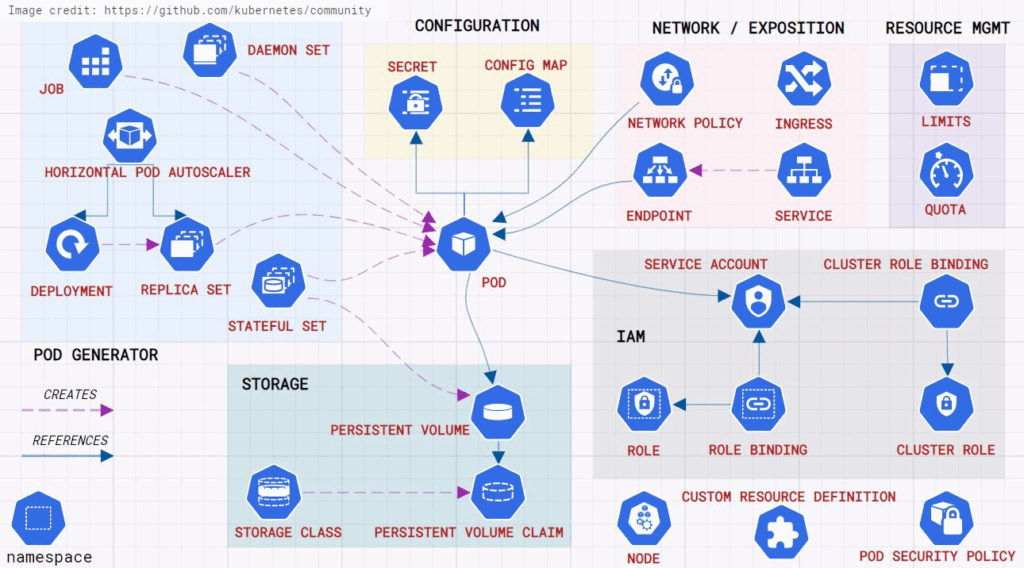
Kubernetes Security Architecture: Enterprise Defense in Depth
Enterprise security architects managing Kubernetes deployments face a multi-dimensional security challenge. Unlike traditional infrastructure, Kubernetes introduces complex interdependencies between workloads, configurations, networking, and identity management that require architectural thinking beyond perimeter defense.
Enterprise Kubernetes Attack Surface
Modern Kubernetes environments present multiple attack vectors that enterprise architects must address:
Workload Layer Security Gaps:
- Misconfigured pod security policies and resource limits
- Vulnerable container images and exposed secrets in configurations
- Inadequate network segmentation between application tiers
- Uncontrolled service-to-service communication patterns
Infrastructure Control Plane Risks:
- Over-privileged service accounts and role bindings
- Exposed API server endpoints and weak authentication policies
- Storage misconfigurations allowing data persistence attacks
- Insufficient audit logging and monitoring coverage
Defense-in-Depth Architecture Framework
Identity and Access Management: Implement least-privilege RBAC with custom resource definitions, service account automation, and integration with enterprise identity providers. Pod security policies must enforce non-root execution and restrict privileged escalation paths.
Network Security Controls: Deploy network policies for microsegmentation, ingress controllers with WAF capabilities, and service mesh integration for encrypted east-west traffic. Endpoint security requires both ingress filtering and egress monitoring for data exfiltration prevention.
Configuration Security: Establish GitOps workflows with security scanning for infrastructure-as-code, automated secret management through external vault integration, and drift detection for configuration compliance.
Runtime Security Monitoring: Deploy behavioral analysis for anomalous pod activity, persistent storage monitoring, and integration with enterprise SIEM platforms for correlation with broader threat intelligence.
Enterprise Implementation Strategy
Assessment Phase: Map existing Kubernetes deployments against the attack surface model, identifying high-risk configurations and compliance gaps with enterprise security frameworks.
Hardening Phase: Implement security controls systematically—starting with RBAC and network policies, then advancing to runtime monitoring and automated remediation.
Governance Phase: Establish security as code practices with policy engines like OPA Gatekeeper, automated compliance reporting, and integration with enterprise GRC platforms.
Enterprise architects should prioritize security controls based on business risk rather than technical complexity. The interconnected nature of Kubernetes security requires platform-thinking: individual point solutions create gaps that sophisticated adversaries will exploit.
0 comments